Projects - 29 July 2025

Senegal: Bridging the Educational Divide in Rural Communities

Since 2023, Libraries Without Borders has been collaborating with the Senegalese Ministry of Education to improve access to quality learning resources in the region of Kédougou, one of the most remote areas of the country. The project is equipping 70 schools with digital learning spaces, offering teachers and their students easier access to diverse educational content, even without an internet connection. 

Major Educational Challenges 

Senegal faces deep inequalities in access to education, particularly in its rural areas. The Kédougou region, in the southeast of the country, illustrates these difficulties: remote schools, lack of infrastructure, high dropout rates, and limited Internet access. In a region where youth represent more than half the population, access to education and employment is a crucial socioeconomic and political issue. Today, 50% of young people in Senegal’s rural areas are neither employed, nor in education, nor in training*, and only 27% manage to complete secondary school**. 

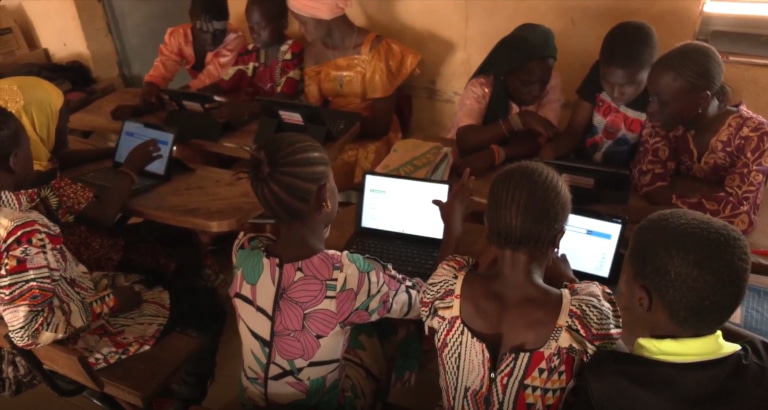
Together with the Senegalese Ministry of Education, BSF has installed a Digital Learning Hub in 70 primary schools across the Kédougou region. Each of these hubs is equipped with an Ideas Cube digital library, which operates without an internet connection, and provides access, via tablets and computers, to thousands of educational resources. Adapted to national curricula and available in national languages, this content includes videos, courses, interactive exercises, and educational games. 
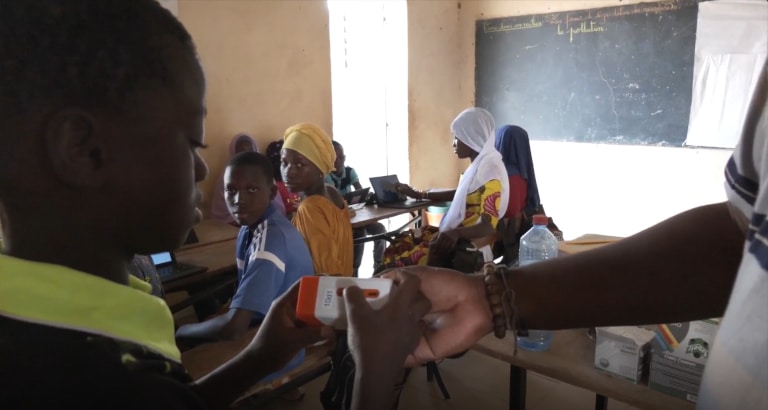
In addition, 700 Kajou SD cards have been distributed for individual and mobile access to these resources. A continuous training program also strengthens teachers’ digital skills and supports them in adopting the tools, with the help of an AI-powered educational assistant. 

“This system plays a key role in improving learning conditions. It not only compensates for the lack of textbooks but also enriches the teaching materials available to instructors. Thanks to this, knowledge transmission improves, and students develop greater autonomy in their learning.” Bara Kamara, Project Manager at BSF.

Pedagogy Enriched by Technology

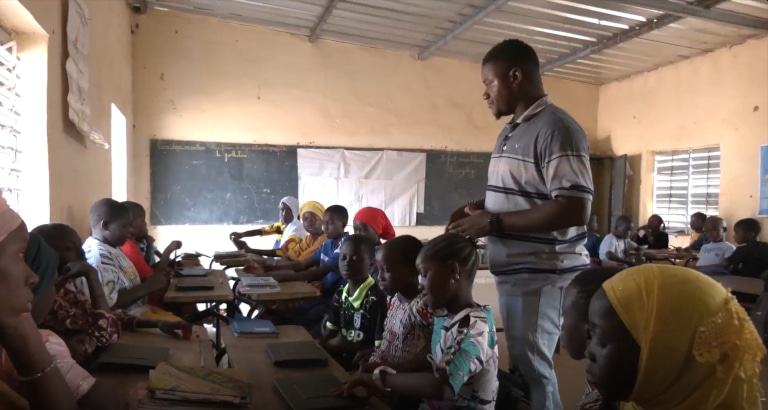
The integration of digital technology into teaching is now transforming the practices of the 500 teachers involved, offering them a diversity of materials that enrich lesson preparation and facilitate classroom understanding. Proof of this commitment: 80% of trained teachers use digital resources at least once a week, whether in class or outside. 

“Sometimes, explaining a concept takes a long time due to language barriers and students’ low level. But with illustrative images and videos, understanding is much faster. For example, for sports activities, I projected games, and in less than five minutes, students grasped the rules. Once on the field, they directly applied the instructions, whereas before, I spent time detailing the games and demonstrating everything.” Makily Gassama, Director of the Bantata School. 

Beyond learning, the project also aims to reduce the digital divide and strengthen teachers’ autonomy in using new educational technologies. Specific training sessions enable them to fully exploit the resources made available. This has a direct impact on teaching quality, student engagement, and results. 

“Since this project was installed at the Kérévane school, students’ educational levels have improved. One of our students even came first in the departmental level. We’ve also noted that absences have decreased because students love learning with the Ideas Cube. They are more motivated, become autonomous in their work, and now know how to use digital tools, which they couldn’t do before.” Bou Traoré, Director of Kérévane School. 

These digital learning spaces are also open to local communities. Women, for example, consult content related to agriculture and market gardening, thus strengthening local capacities and the project’s social impact. 

Throughout the project, funded by the Development Innovation Fund***, an independent impact evaluation is being conducted by Evalab, in a research-action approach. It compares the 70 beneficiary schools with 70 mirror schools to measure the system’s effects on student success, school dropout rates, and inequalities between girls and boys. 

By 2028, BSF aims to deploy 1,000 Digital Learning Hubs and train 7,000 teachers across the country. By prioritizing the most isolated areas, this initiative aims to sustainably anchor digital technology in teaching practices and reduce educational inequalities nationwide. 

*Source: African Development Bank
**Source: UNESCO
***The FID, launched on the initiative of Esther Duflo – Nobel Prize in Economics and co-founder of J-PAL, MIT’s poverty action lab – supports rigorously evaluated innovations to address major development challenges.

+ 2 000

videos and digital content selected by Ideas Cube

476

people trained

17, 415

project beneficiaries

At Libraries Without Borders, we know that education is essential to reducing inequalities and opening new horizons for younger generations. By providing innovative solutions adapted to the most isolated schools in Senegal, we contribute to strengthening access to knowledge and combating the digital divide.