

 Donate
 Join our team
 Sign our petitions
 Volunteer
 Newsletter
Syria, access to education is a major challenge for children and adolescents who have fled violence. For over a decade, war has devastated the country, destroying schools and infrastructure, compromising the future of an entire generation by depriving them of stability and learning. Faced with this urgency, Libraries Without Borders and the Norwegian Refugee Council are working together to preserve their access to education.
Education, a Humanitarian Emergency
Triggered in the wake of the 2011 Arab Spring, violently suppressed by Bashar al-Assad’s regime, the Syrian conflict has profoundly disrupted the country’s education system. Thousands of schools have been destroyed or converted into makeshift shelters, and access to education remains limited in many regions. According to UNICEF, more than 2.4 million Syrian children are still out of school today, while 1.6 million are failing academically or at risk of dropping out. Despite the fall of the regime, educational needs remain pressing, particularly with the gradual return of refugees from neighboring countries – Jordan, Lebanon, Turkey – and internally displaced persons attempting to return to their towns and villages.
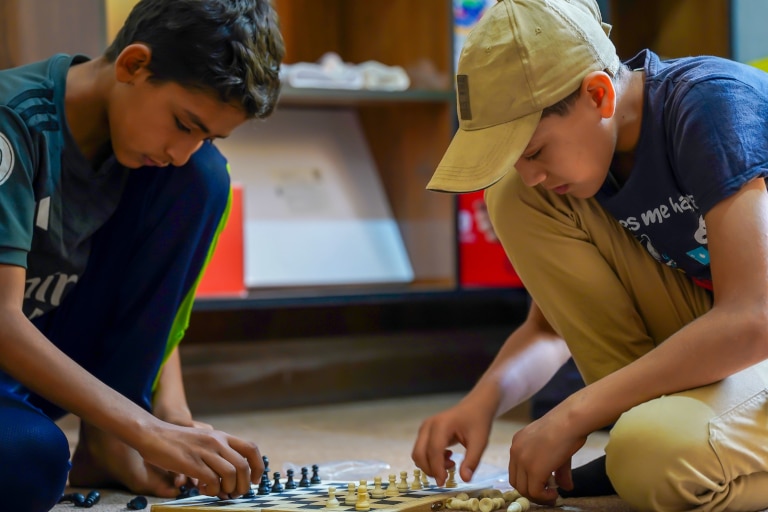
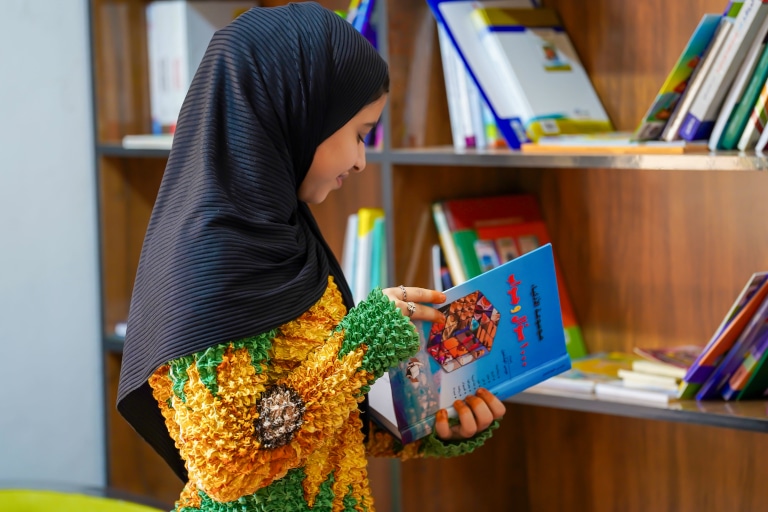
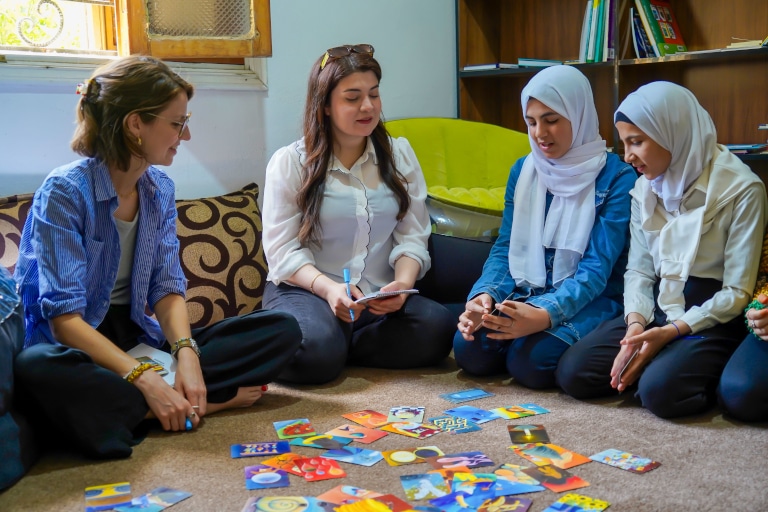
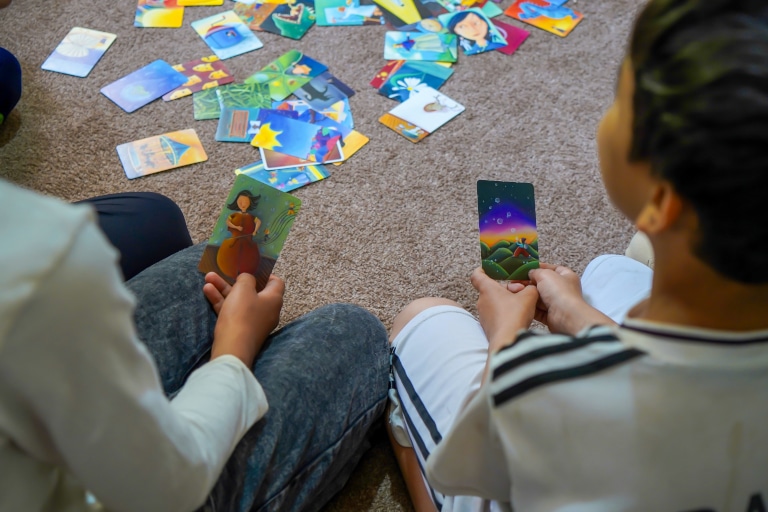
In the Mahmoudli and Areesha camps, where thousands of displaced families live, education remains a daily challenge. A school is present, but it cannot meet the needs of all students due to a lack of educational materials. To address these gaps, BSF and NRC are intervening in six educational centers across both camps by deploying 48 Ideas Cubes, small computer servers transformed into digital libraries.