Projects - 1 December 2025

Nigeria: Helping Survivors of Conflict-Related Sexual Violence

In northeastern Nigeria, violent clashes between armed groups have plunged the region into a deep humanitarian crisis. Women and children, the primary victims, bear the full brunt of conflict-related sexual violence. Since 2024, Libraries Without Borders and We are NOT Weapons of War (WWoW) havdeployed thBackUp web application – developed by WWoW – to prevent this scourge and support survivors. 

Rape as a Weapon of War 

Africa’s fourth-largest economy, Nigeria faces growing instability fueled by the presence of armed groups. In several regions of the country’s north, populations still live with the consequences of more than a decade of violence linked to the Boko Haram insurgency. This conflict has caused tens of thousands of deaths, millions of displacements, and a major humanitarian crisis. 

In this context, women and girls are the primary victims of widespread violence. Sexual violence is used as a weapon of war, aimed at terrorizing, punishing, and controlling populations. Fighters from armed groups, as well as certain local forces, have committed these atrocities, perpetuating a cycle of fear and silence. Although men are also affected, their suffering remains largely ignored and taboo. 
According to UN estimates, between 2009 and 2017, approximately 7,000 women and girls – as well as 217 children – were victims of rape or other forms of sexual violence in the context of conflicts in Nigeria. The impunity surrounding these crimes, coupled with inadequate care for survivors due to social stigma and mistrust of authorities, exacerbates the situation and leaves victims in cruel abandonment. 

“Survivors’ access to medical care, protection, and legal recourse is insufficient, due to a lack of coordination between services, inaccessible information, and the absence of safe spaces where victims can find appropriate support.” Maïc Lesouef, Project Coordinator at WWoW. 

In this society marked by widespread taboos, survivors often remain silenced. 

BackUp: An Innovative, Community-Based, and Participatory Approach 

Funded by the Crisis and Support Centre of the Ministry for Europe and Foreign Affairs, the project is based on the deployment of a web application developed by WWoW, BackUp, which enables the identification of survivors, the secure documentation of sexual violence incidents, and the coordination of responses adapted to their needs. 

After several testing phases in Libya, Burundi, and Guinea-Conakry, this initiative marks its first medium-term implementation in the states of Sokoto, Adamawa, Yobe, and Zamfara, with the ambition of reaching an increasingly wide range of conflict zones. 

“BackUp allows us to identify survivors of conflict-related sexual violence, preserve their stories, and facilitate and coordinate their access to care services. Most importantly, it enables us to collect and secure data on this phenomenon in order to improve the response provided and fight impunity. This tool provides field access without intermediaries and allows survivors to raise their voices and be heard.” Maïc Lesouef, Project Coordinator at WWoW. 

In addition to the application, twenty Ideas Cubes from BSF are being deployed in the affected areas. These digital libraries, accessible without an Internet connection, offer essential educational and informational resources to affected communities – particularly those without Internet access. Adapted to field realities as well as cultural and linguistic specificities, this content plays a key role in preventing sexual violence and empowering populations, by directing them to support services and equipping local actors for better care. 

Access to information is the first lever of empowerment. Knowing your rights means being able to claim them and regain an active place in society. Too often, victims don’t know where to turn, are unaware of their rights, or fear stigmatization. By providing them with clear and accessible resources, we enable them to make informed decisions and regain control over their recovery journey.” Maïc Lesouef, Project Coordinator at WWoW. 

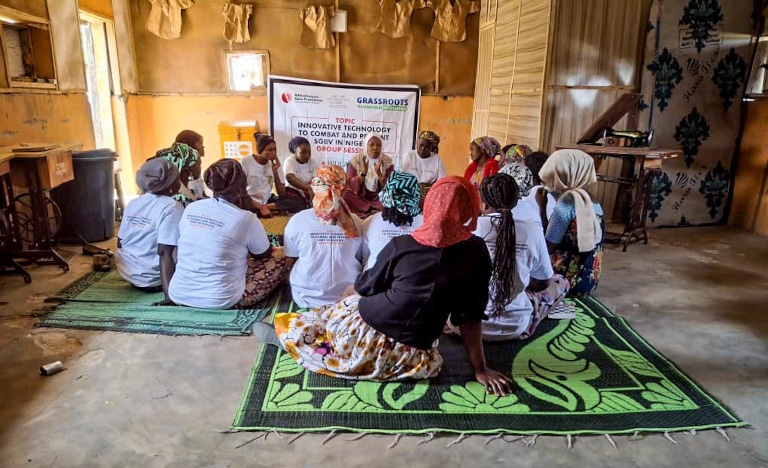
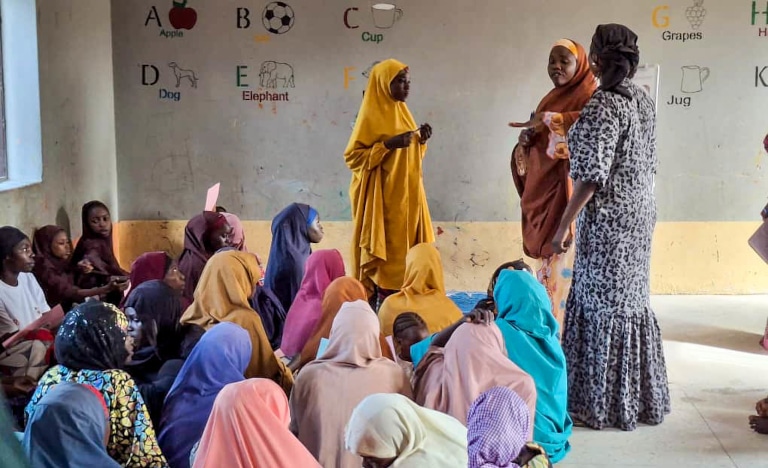
To maximize the impact of this initiative, BSF and WWoW are collaborating with seven local organizations* including Grassroots Researchers Association, a Nigerian association which, thanks to its local roots and knowledge of local dynamics, facilitates community buy-in to the project. It regularly organizes discussion groups with civil society organizations, community and religious leaders. These spaces for exchange help raise awareness about sexual violence issues, gather testimonies, and adapt interventions to field realities. 

*Justice Development and Peace Commission, Life at Best Development Initiative, Jesuit Refugee Service, Grassroots Researchers Association, Integrated Women and Youth Empowerment Center, Premiere Urgence International, Grassroot Initiative for Strengthening Community Resilience.

Faced with the scale of the crisis, BSF and WWoW aim to offer tangible hope to survivors and lead the fight against impunity for sexual crimes in conflict zones.