Projects - 11 December 2025

Innovation Serving Survivors of Sexual Violence in Conflict

In war zones, sexual violence is wielded as a weapon of domination and terror. In countries such as the Democratic Republic of Congo, Nigeria, and Ukraine, tens of thousands of people – primarily women – endure its devastating physical, psychological, and social consequences each year. In this context, Bibliothèques Sans Frontières works alongside humanitarian, legal, and community actors supporting survivors, while leading awareness-raising initiatives to combat this violence. 

For several years, BSF has deployed libraries and digital tools to support women affected by sexual violence in conflict zones.

In Ukraine, women-only spaces have been established within centers that assist survivors, fostering their well-being and reintegration. In Nigeria, an innovative application – Backup, developed by our partner We Are Not Weapons of War – has been available since this summer through our Ideas Cube digital libraries. It enables victims to document evidence, learn about their rights, and access psychosocial support, even without an internet connection. In the Democratic Republic of Congo, we have supported mediators at the Maison Dorcas of the Panzi Foundation, where women and children who have experienced violence find refuge. There, a library of more than one thousand books supports educational, psychosocial, and reintegration activities.

“We have made access to information a cornerstone in the fight against conflict-related sexual violence. These tools not only help survivors rebuild their lives, but also empower communities to prevent such crimes by deepening their understanding of the issues and their impacts.” Léa Kor Fresnais, Project Manager at BSF.
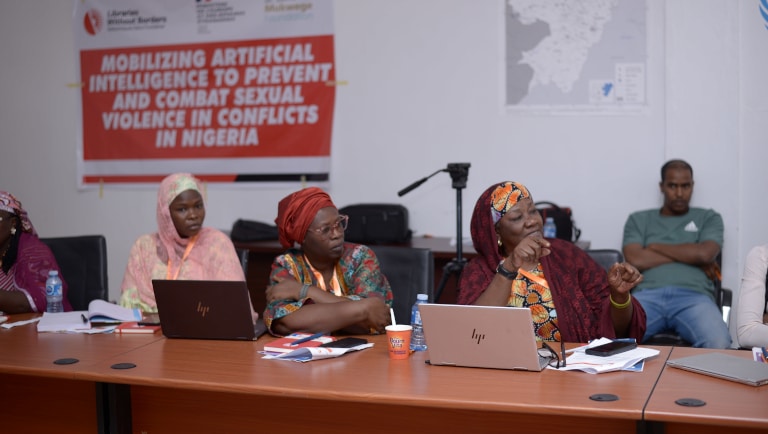
Training, Nigeria
Training, Nigeria

A New Tool: An AI Assistant to Combat Sexual Violence

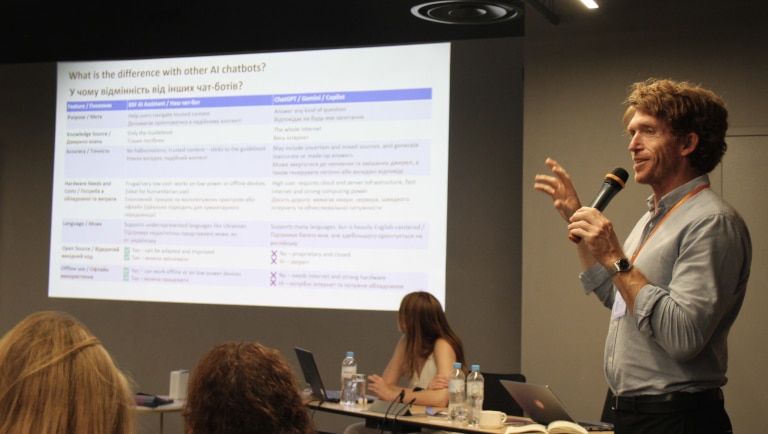
This autumn, BSF is taking a decisive step forward with the launch of a pilot project in the DRC, Nigeria, and Ukraine: an artificial intelligence assistant designed to strengthen the prevention of and response to conflict-related sexual violence. Developed in partnership with the Mukwege Foundation and PleIAs, this tool makes the Mukwege Foundation’s Guidebook on State Obligations Regarding Conflict-Related Sexual Violence more accessible and easier to understand.

Supported by the Crisis and Support Center of the French Ministry for Europe and Foreign Affairs, the project aims to strengthen the capacities of key actors – policymakers, justice professionals, lawyers, academics, NGOs, United Nations agencies, and survivor networks – so they can better inform states and hold them accountable to advance justice. 

Training, Ukraine © Mariia Moshniacka

Empowering Action

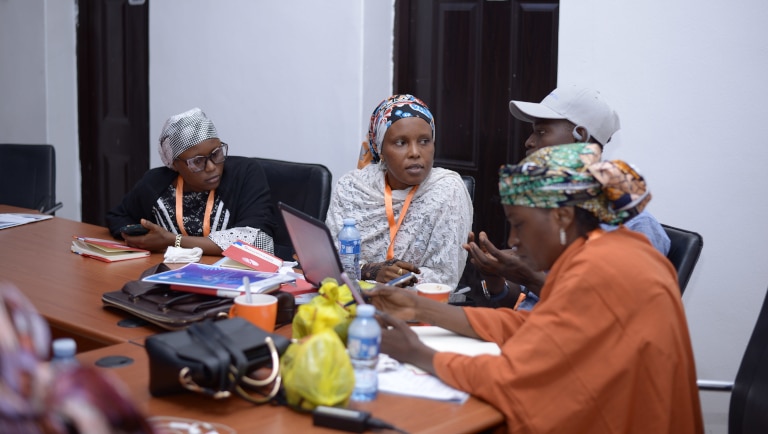
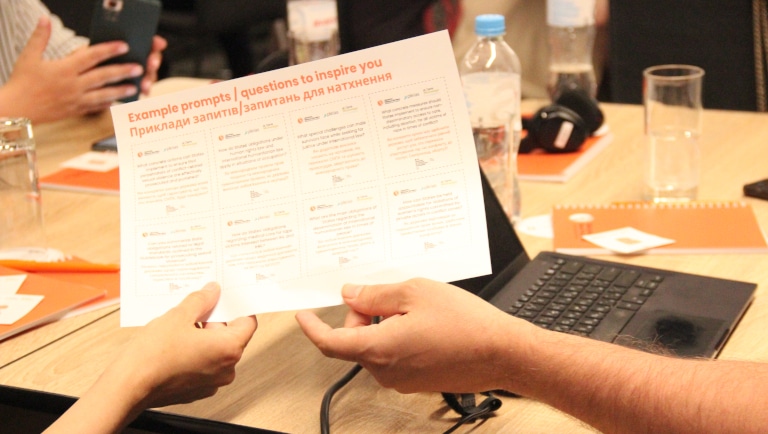
Throughout the summer and autumn, workshops to present and test the tool were held in Nigeria, Ukraine, and the DRC. The ultimate goal is clear: to provide frontline actors with an accessible and practical tool to strengthen their advocacy efforts, better protect victims, and help prevent future crimes. 

“Innovation is not a gimmick in our interventions. It is a concrete way to transform access to justice, to education, and to human rights in contexts where conflict-related sexual violence destroys lives and shatters communities.” Léa Kor Fresnais.

On November 27, 2025, BSF, Université Côte d’Azur and the City of Paris welcomed Pramila Patten, the UN Special Representative on Sexual Violence in Conflict, for a major event dedicated to combating the use of sexual violence as a weapon of war.

For the past three years, BSF has been working alongside the United Nations to strengthen prevention, documentation and support for survivors of sexual violence in conflict. This collaboration is a profound source of pride for us: it informs our work in the field, amplifies our impact, and reaffirms BSF’s central role in this global fight for justice and dignity. 

Confronting conflict-related sexual violence goes far beyond providing assistance: it demands collective commitment to transform systems, uphold the voices of survivors, and ensure these crimes never go unpunished.