Projects - 14 January 2026

Recovery and Resilience in the Moroccan High Atlas Moutains

On September 8, 2023, an earthquake of unprecedented magnitude struck the High Atlas mountains, causing the deaths of nearly 3,000 people and leaving tens of thousands of families homeless. In this rural region, already marked by geographic isolation and economic fragility, the disaster upended lives, destroying infrastructure, roads, and schools. 

Faced with this emergency, Libraries Without Borders and its partners mobilized to ensure educational continuity for children and support the social and economic reintegration of affected communities. 

Education, a condition for resilience

According to the Moroccan Ministry of National Education, 585 schools and boarding facilities were damaged by the earthquake. For thousands of students, the disaster was a brutal interruption to their educational journey. Yet school is much more than a place of learning: it is a space of stability, an essential anchor point during a period of chaos.

“After an earthquake, we rebuild roads and houses. But for children, we must also rebuild routines, confidence, a future. That’s the role education plays.” Mouad Ouaissa, Project Manager in Morocco, BSF. 

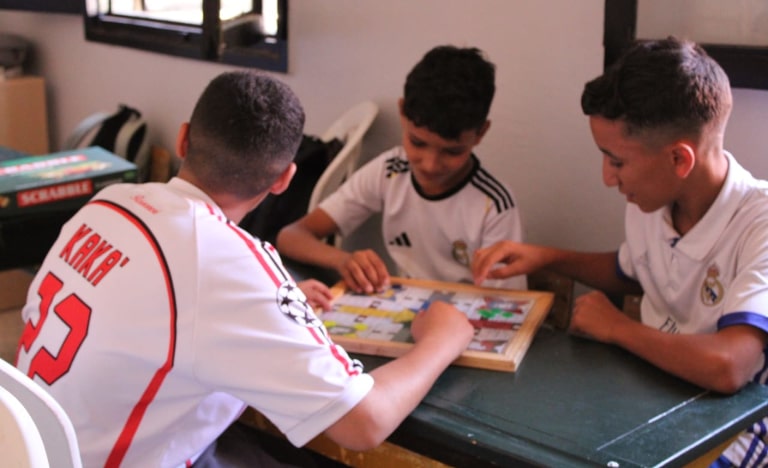
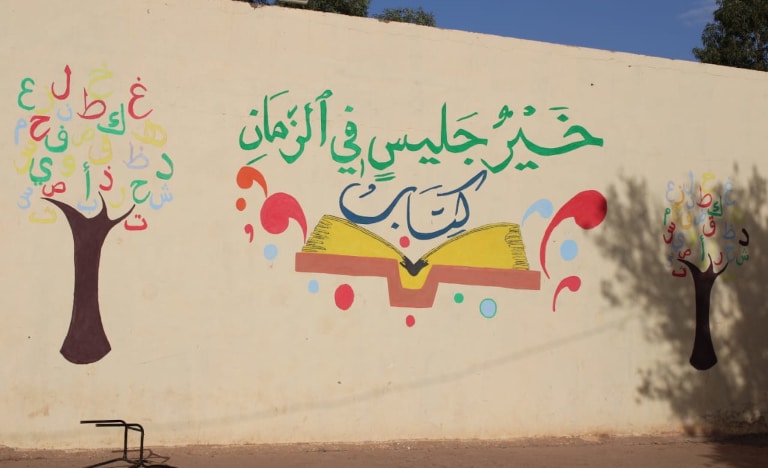
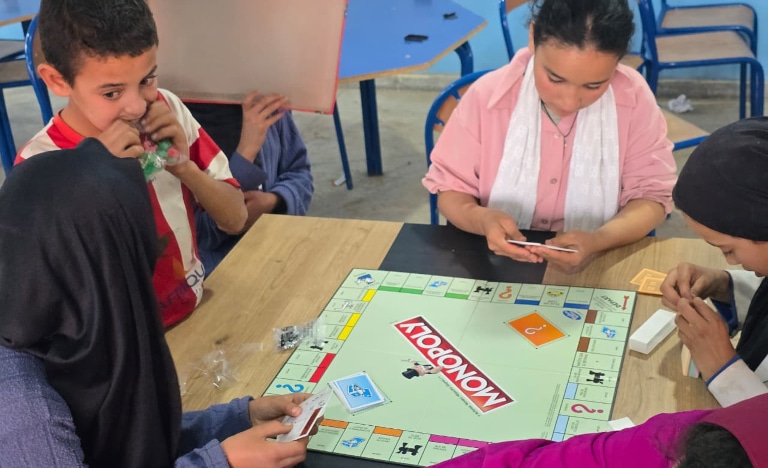
To complement existing school facilities – often operated in temporary spaces or containers – BSF deployed two Ideas Box media libraries, as well as twelve micro-libraries, in the hardest-hit communities of the Al Haouz and Souss Massa regions. With these tools, residents have access to books, board games, creative and sports materials, textbooks, and educational videos accessible without an internet connection via our Ideas Cubes. These tools don’t just meet an educational need. They also offer welcoming and safe spaces that promote learning and development, where children, teenagers, and adults can gather, share, and regain their footing in a profoundly disrupted daily life.
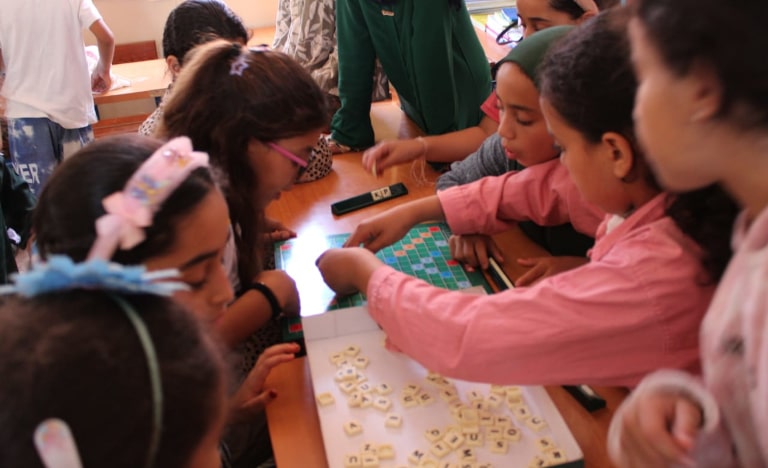
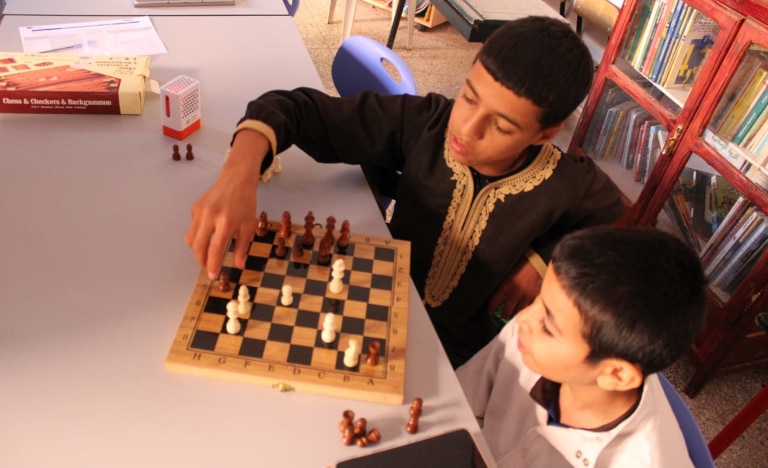
A key partner in the project, the Franco-Moroccan NGO Migrations & Développement supports the revival of social and educational activities in affected areas, particularly within the Dar Taleb/a – rural boarding facilities that house students deprived of classrooms after the earthquake. 

“BSF’s tools have enabled the creation of learning spaces within the Dar Taleb/a, where young people can read, study, and express themselves, while simultaneously strengthening the skills of local educators through training in digital resources and sociocultural programming.” Océane Correard, Project Coordinator, Migrations & Développement.

Beyond the boarding facilities, the impact of the Ideas Boxes is also felt in the most isolated regions, where they become true anchor points for communities. In Ighil, the mobile media library run by the Federation of Women’s Rights Leagues plays a crucial role, as literacy facilitator Salma Ait Moulid notes: 

“The Ideas Box has become a true living space, a rallying point. It makes learning more vibrant and helps break the intellectual and geographic isolation of the area. After the shock of the earthquake, residents need to regain a sense of normalcy. The Ideas Box then offers essential psychosocial support: it helps shift focus away from loss, to turn toward the future again, to stay informed and continue to grow. My dream would be for the women I work with today to become, tomorrow, the facilitators of this space.” 

In service of social and economic reintegration

The earthquake exacerbated inequalities already present in Morocco’s rural regions, particularly for women and young people, “who are among the most vulnerable groups facing the consequences of the disaster,” emphasizes Océane Correard. This is why the project also aims, in addition to combating school dropouts, to promote the social and economic reintegration of communities. The libraries also serve as springboards for vocational training, local entrepreneurship, and access to essential information about health and rights.

“The project has highlighted the importance of integrating access to education, culture, and information at every stage of a reconstruction project. It has also brought to light that a community’s resilience depends as much on material reconstruction as on social and psychological reconstruction.” Océane Correard.

This program is made possible thanks to financial support from the French Development Agency and Société Générale Group, and relies on a network of local organizations: Migrations & Développement, El Amane for Women and Children, the Federation of Women’s Rights Leagues, SOS Children’s Villages, and FOJER. Through this initiative, BSF seeks to lay the foundations for reconstruction that goes beyond infrastructure. This reconstruction involves education, solidarity, and the empowerment of populations, so that the 2023 earthquake does not permanently compromise the future of a generation. 

Since 2007, Libraries Without Borders has been working to ensure access to knowledge for all in more than thirty countries.

We create innovative cultural and educational spaces to reach people affected by crises and poverty, enabling them to find entertainment, continue learning and dreaming, build connections, and (re)construct their future.