Projects - 28 April 2026

In the United States, restoring trust to strengthen vulnerable communities

In the United States, immigrant communities are facing heightened political hostility, as rhetoric and policy proposals around immigration, amplified by figures like President Donald Trump, continue to shape a climate of fear and exclusion. Simultaneously, millions of under-served families remain cut off from stable access to books, early learning opportunities, and trusted public resources. The families most affected are often the ones already stretched thinnest by poverty, language barriers, or unstable housing, and their children have the least access to books at home and the fewest chances to see their own lives reflected in print.

Since 2008, Libraries Without Borders (LWB) has been working across the country to address these overlapping challenges. The organization’s approach is guided by a core belief: serving a community begins with earning its trust.

Dr. Lovesun Parent is the executive director of Libraries Without Borders U.S. (LWB). She joined the organization after years working in international development and social inclusion. For her, the notion that community is earned rather than assumed is central to LWB’s work. She sees libraries not only as educational spaces, but also as tools for social and economic mobility.

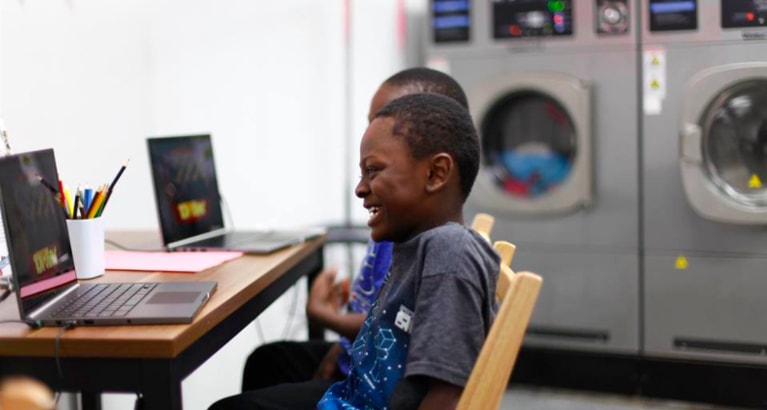
“I think we take community trust for granted,” Parent said. “The nonprofit sector loves to use the word ‘community,’ but we’ve got to peel that back a little bit and ask, what is community?” For Parent, the answer begins not with institutions, but with the people they serve. A library matters not only because of what it makes possible – access to information, a place to gather – but because of the trust it builds with its patrons. That understanding shapes LWB’s work across its U.S. programs. The organization has developed rapid-response and long-term initiatives in a range of contexts, from deploying pop-up libraries and educational tools in Puerto Rico following Hurricane Maria, to creating programs like Wash & Learn, which transforms laundromats into informal learning spaces for children and families.
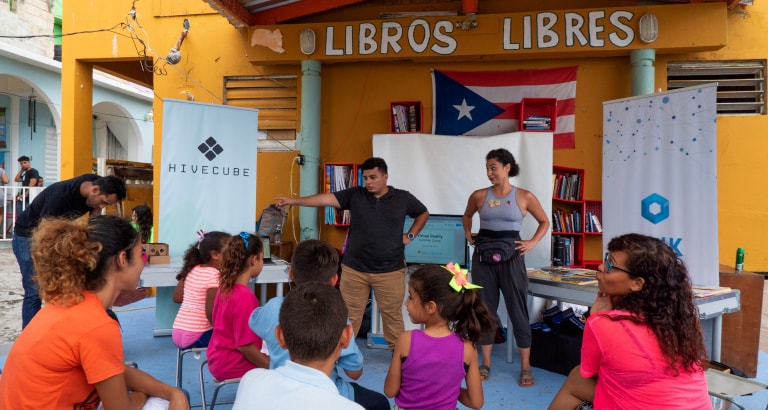
Atelier Ideas Box à Porto Rico

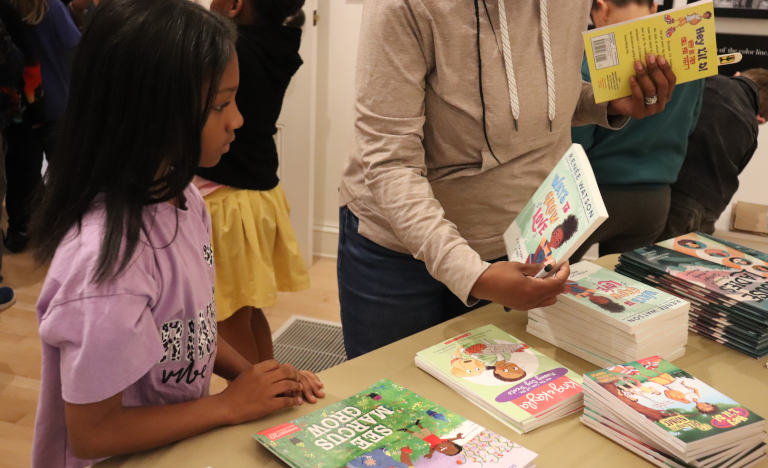
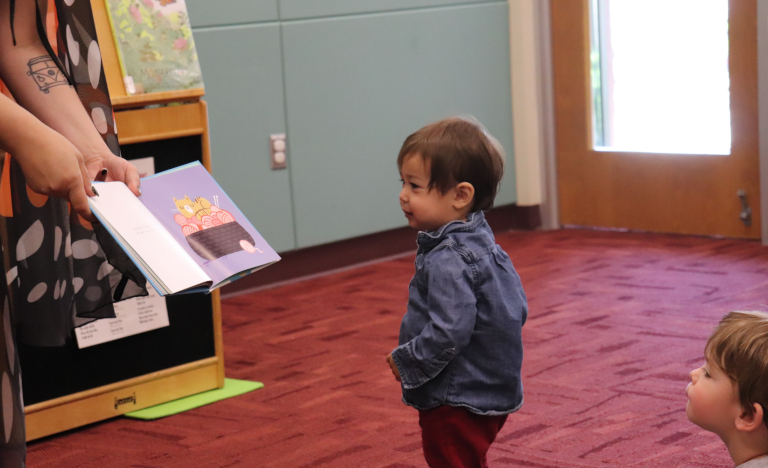
More recently, LWB’s LIFT program has grown to reach families experiencing poverty across Washington, D.C., Baltimore, and Richmond, with a goal of serving 12,000 families by 2028. In addition to supporting libraries directly through institutional partnerships, LWB works with shelters, WIC offices, early childhood centers, and other community organizations to bring books and learning opportunities into spaces people already know and trust.

This approach is especially important in the current political climate. In the Bronx, where LWB’s Library School Partnerships program works with schools serving immigrant communities, Parent said the organization works from a do-no-harm principle: the safety of the families it partners with comes before any program goal. LWB avoids models that might place already vulnerable families at greater risk. “We don’t want to mark people,” she said. “We don’t want people at risk.” Instead, the organization works through local partners, develops bilingual resources, and supports centers that do not subject families to unnecessary scrutiny. 

“We’re trying to push back by showing that libraries, community centers, and places of learning can really be spaces to protect these folks,” Parent said. “We just have to remember that it isn’t our role to ‘helicopter in.’”   

LWB partners with organizations that have already built durable ties within the neighborhoods they serve. In Baltimore, that includes school-based early learning hubs that support children and their families through school-readiness programming, parent support, and referrals. At these centers, mothers can meet regularly, support one another, and connect with specialists, from lactation consultants to lawyers, who can respond to families’ concrete needs. 

“These women have seen how the center takes care of them and their kids,” Parent said. “If I’m not doing that, I can’t then claim that I’m in community with these women.” 

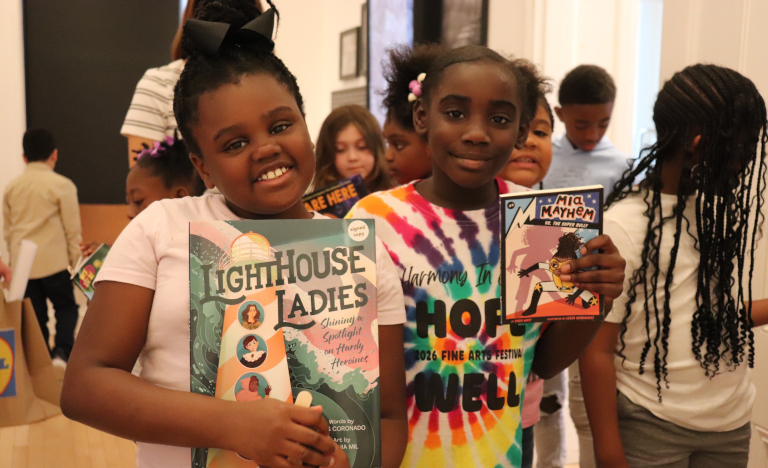
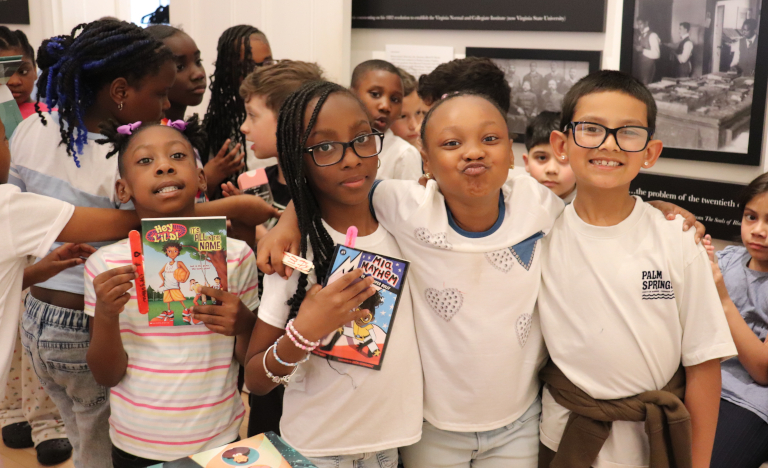
In Baltimore, a LIFT storytelling project is now helping ten families write and publish their own children’s books. Drawing on daily routines, food, and cultural traditions, the stories allow children to strengthen their literacy and to see their own families and identities reflected in print. 

“That way children can see themselves as authors,” Parent said. “They get to tell their own stories.” For Parent, early authorship is groundwork for leadership. Children who learn young that their stories carry weight tend to become adults who expect a voice in their schools, their neighborhoods, and the decisions that shape their families’ lives. 

LWB works alongside marginalized communities in both rural and urban places, supporting them as they break down barriers to access. Its programs vary, but they share the same starting point: relationships strong enough that families at risk feel recognized, protected, and able to act on their own behalf. In communities where public systems have too often failed to reach them, that trust is what makes the rest of the work possible. 

An article by Cole Frost

Since 2007, Bibliothèques Sans Frontières (Libraries Without Borders) has been working to provide access to knowledge for all in some thirty countries, including France.

The NGO creates innovative cultural and educational spaces to reach out to people affected by crises and precariousness, allowing them to enjoy themselves, continue learning and dreamingforge connections, and (re)build their future.