Projects - 23 June 2026

Bibliotherapy in Ukraine: Reading to Recover

Led by Libraries Without Borders (LWB) amongst a European consortium, the Libraries of Emotions for Good program develops bibliotherapy spaces in Ukraine, where books help each participant to better understand and manage their emotions. Through these exchanges, this initiative makes reading a real support to psychological wellbeing.

In a country deeply affected by war since 2022, these spaces offer residents a moment of comfort, where they can be heard and continue to rebuild themselves.

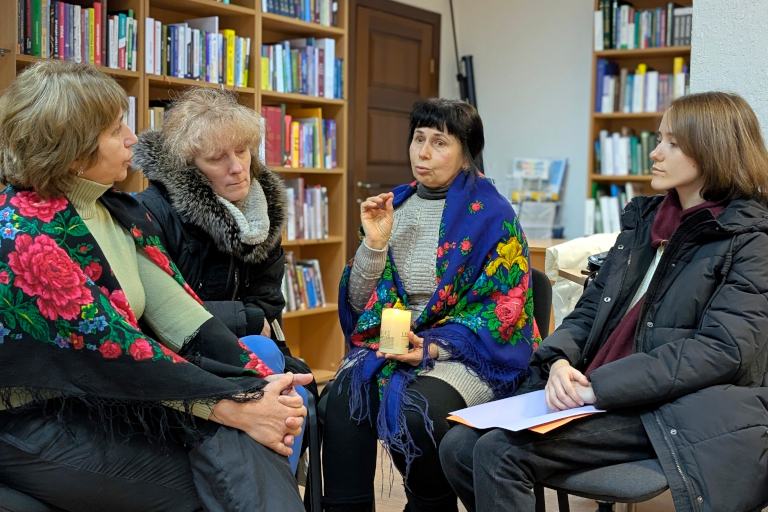
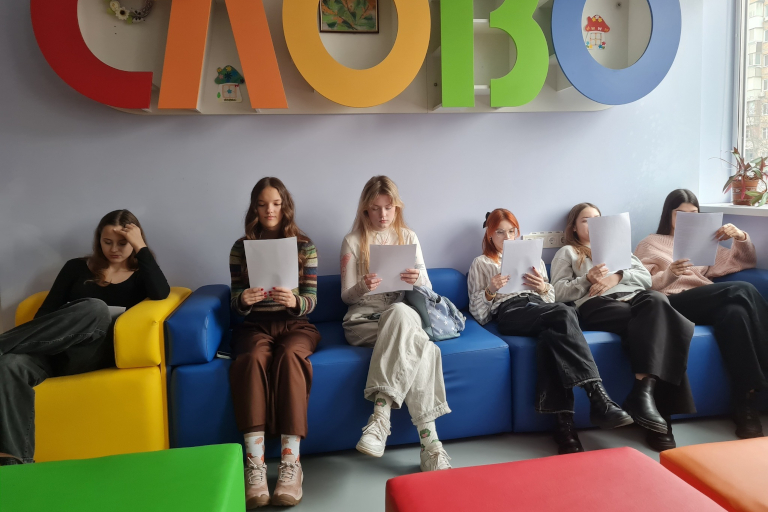
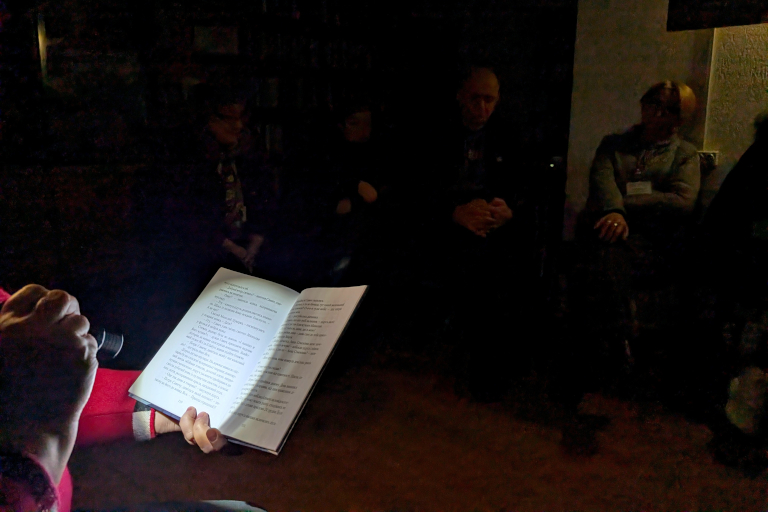
In February 2026, LWB brought together 12 Ukrainian librarians for a bibliotherapy workshop in Kyiv, who came to develop this approach which has become essential in the context of the prolonged war. During the session, a short text centered on life at the front is read as a group. During the discussion, emotions quickly rise : 4 of 12 participants cry as they evoke their own experiences of the war. Camille Popkoff, LWB representative in Ukraine, was present at the workshop. 

“The text itself could seem fairly ordinary outside of this context,”  she explains. “But as soon as the participants discussed what it reminded them of, it became really powerful. It is impressive to see the impact books can have.”
Bibliotherapy relies on the use of reading and literature as a tool to support mental health and emotional wellbeing. The term was coined in 1916 by American essayist Samuel McChord Crothers, with the practice initially developing in military hospitals during the first world war, where books were used to help soldiers process their trauma. Since, bibliotherapy has spread to schools, but also humanitarian contexts, in particular those where access to psychological care is still limited.

The approach, developed by LWB with the French organization Love for Livres and several European partners in Ukraine, Poland, Lithuania, Belgium, Slovenia, and Tunisia, rests on a simple and reproducible plan, centered around 3 action verbs: understand, express, transform.

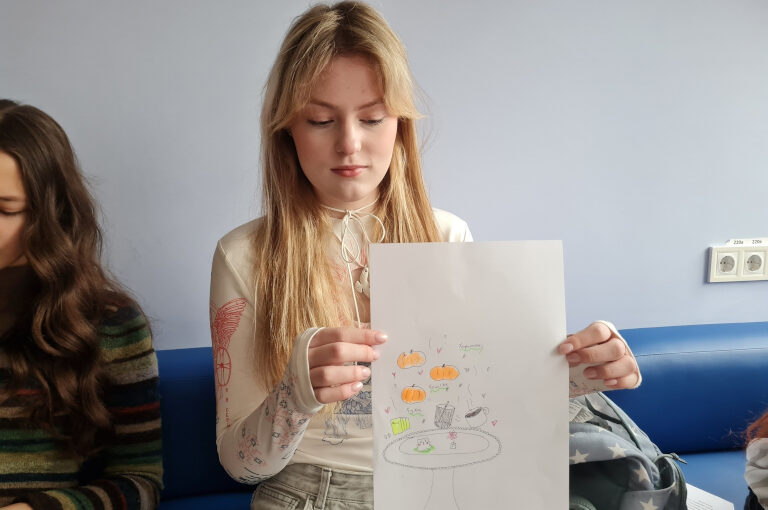
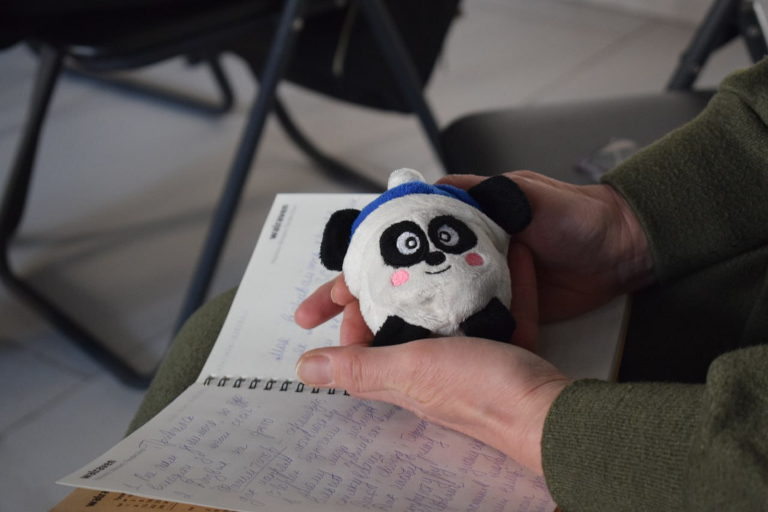
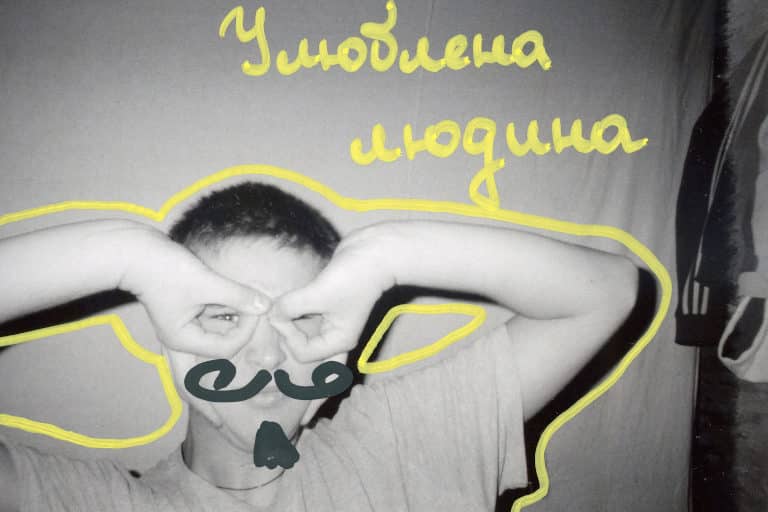
First, understanding: the bibliotherapy session starts with an exercise in emotional self-awareness, with the help of tools such as an emotions wheel, in order to help each participant identify their state of mind and settle into reassuring surroundings before reading begins. Then, expressing: the text, read as a group, becomes a support for personal projection, opening a space for conversation where participants share the words which come to them, between memories, emotions, and personal echoes. Finally, transforming: these emotions are prolonged through creative activities – writing, drawing, or modeling – which allows for them to be shaped, shifted, and to begin processing them.

In Ukraine, the need for psychological support is particularly strong. Now in its fifth year, the war continues to weaken communities, while access to mental health services remains limited, especially in rural zones. In many cases, stigma adds another barrier to requesting help. “People are really strong,” Camille Popkoff underlines. “But that doesn’t mean they don’t need spaces where they can be seen, heard, and supported.”

Bibliotherapy answers specifically to this need by relying on a familiar place: the library. Participants arrive not as patients or victims, but as readers – a posture which facilitates expression and reduces access barriers, both material and psychological. Thus, it is paramount to train librarians in this practice; beyond their cultural role, they become facilitators capable of animating reassuring conversation spaces and adapting sessions to local reality thanks to pedagogical guides designed by the program.

In partnership with Ghent University, BSF is also participating in research on bibliotherapy in the European cultural sector. This collaboration includes the development of an artificial intelligence tool capable of identifying emotions associated with books, in order to help facilitators better orient sessions. The results of this research are expected by the end of 2026.

Translation : Eve Lacote

Since 2007, Bibliothèques Sans Frontières (Libraries Without Borders) has been working to provide access to knowledge for all in some thirty countries, including France.

The NGO creates innovative cultural and educational spaces to reach out to people affected by crises and precariousness, allowing them to enjoy themselves, continue learning and dreamingforge connections, and (re)build their future.

More Like This

On the Ukranian Borders: Building Despite Everything

Projects - 2 July 2024

Ukraine: Libraries as a Refuge

Projects - 8 March 2023