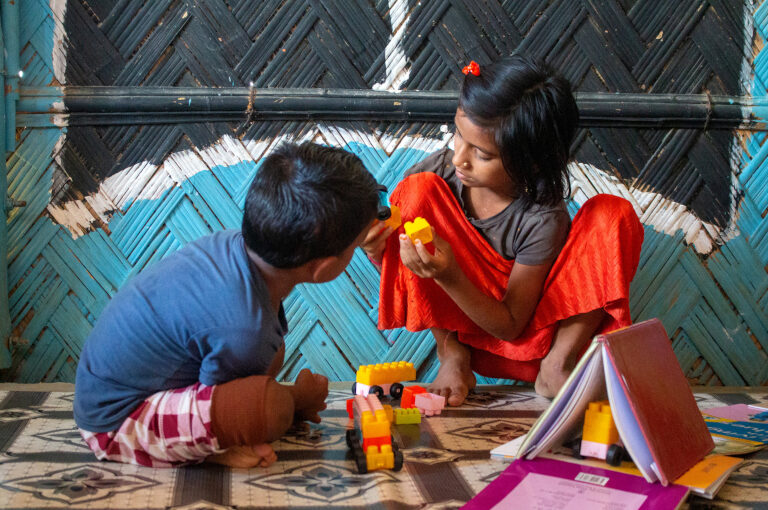
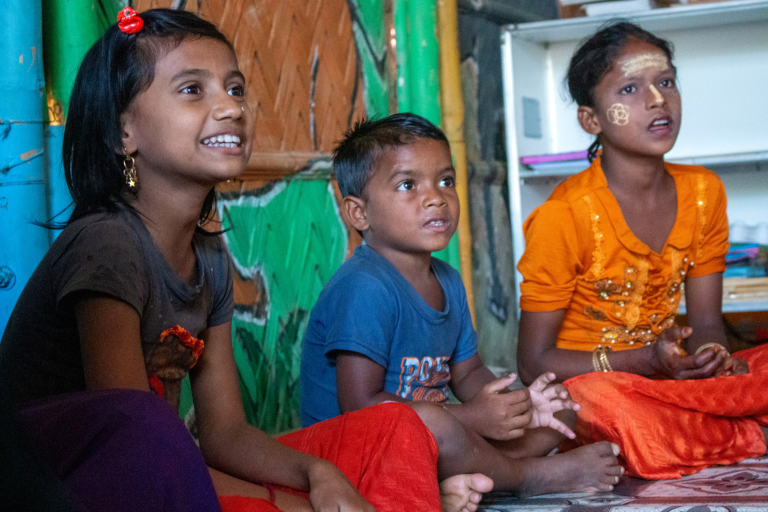
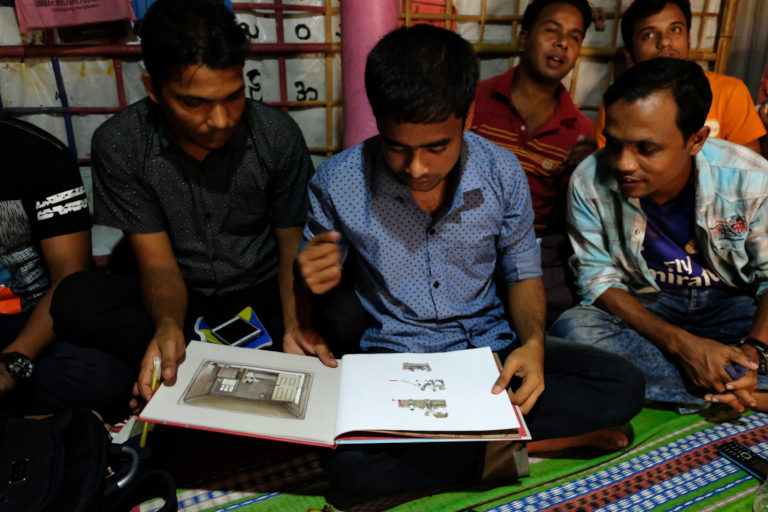
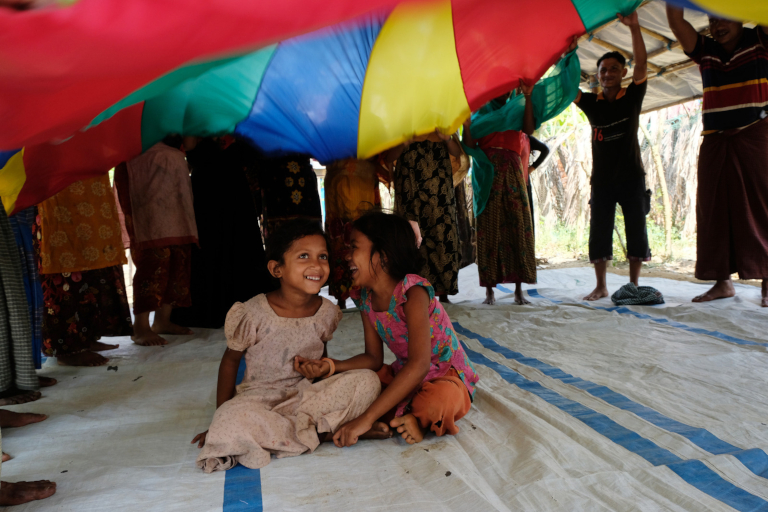
Starting in 2018, our libraries were set up in prefabricated structures, offering access to thousands of educational content and practices, in English and in Rohingya, a language essentially oral, whose written works remain rare. To keep the language alive, we encouraged younger people to gather pieces of history that have been conveyed orally from generation to generation from their elders. This manner of documenting Rohingya culture creates a link between those of different ages. By focusing on content in Rohingya, primarily in audio format, LWB was able to raise awareness among younger generations on issues such as reproductive health and the prevention of gender-based violence. This is particularly important, as nearly 58% of refugees in Cox’s Bazar are less than 18 years old (Unicef, 2019).
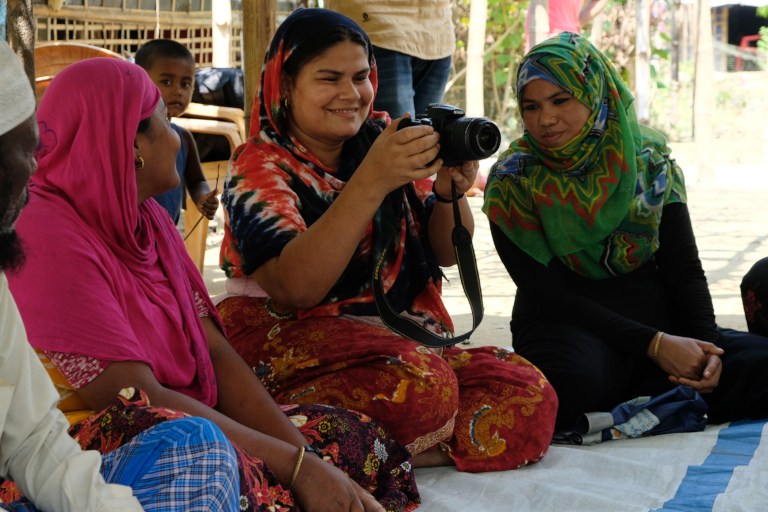
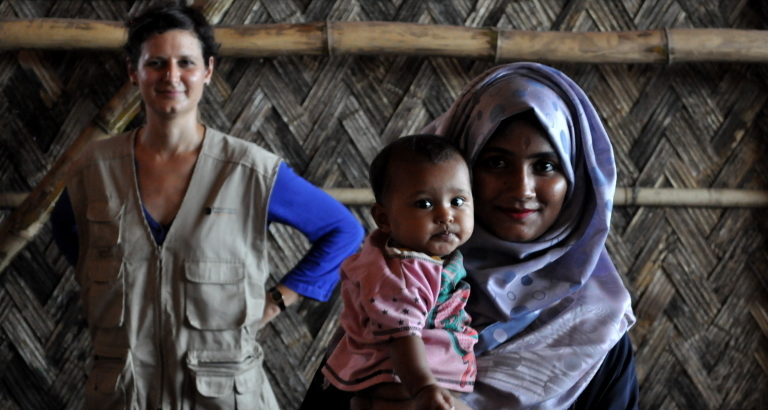
Among the Rohingya refugees, women remain a particularly vulnerable group. “In the camps, where women’s mobility is often restricted, access to these spaces remain a major challenge. To be able to learn and to meet others, even outside of a dedicated space, already signifies a greater step towards autonomy”, adds Julie Pinochet. To reach women directly, mobile teams therefore organize activities for women in places where they naturally socialize– like the wells, where they meet to do laundry.
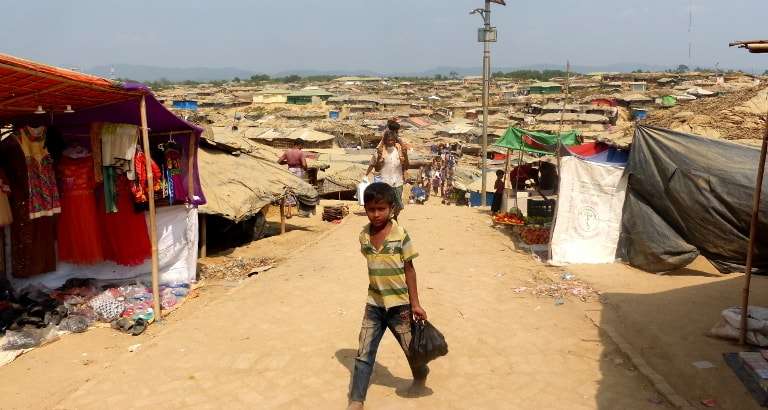
For eight years, these places have served as refuges amidst a daily reality defined by overcrowding– there are around 10,750 refugees per square kilometer in Cox’s Bazar- and vulnerability. We organized workshops to spread awareness about the rights of women and girls, boost their self confidence, and develop their communication skills. Simultaneously, photography and creative expression workshops have helped to reduce tension and reinforce social cohesion.



 Donate
 Join our team
 Sign our petitions
 Volunteer
 Newsletter